Virtual attendant for snack bars and restaurants: the order arrives on WhatsApp
The AI answers the snack bar's call, takes the order, and sends it to the WhatsApp of whoever prepares it. The team confirms price and timeframe with the customer.
By industry3 min read
At the snack bar the phone rings when the griddle is full. Whoever answers puts down the bun, writes it on a piece of paper and goes back. The customer who calls again to find out if it's ready walks into the same rush.
A virtual attendant does the repetitive part: answers, takes the order and delivers it to the WhatsApp of whoever is preparing it. This article describes that path the way Combot works.
What happens on the call
- The person calls the snack bar's number.
- The AI answers with the business name and uses the menu you wrote.
- It notes the items, the doneness, whether it's delivery or pickup, the address and the payment method.
- It repeats the order and only saves it after the person confirms.
- The order appears in Orders on the dashboard.
- Whoever is at the griddle receives the summary on WhatsApp and the link to call the customer.
- The customer receives the same summary on their WhatsApp.
The call is not transferred to the kitchen. What arrives is the message.
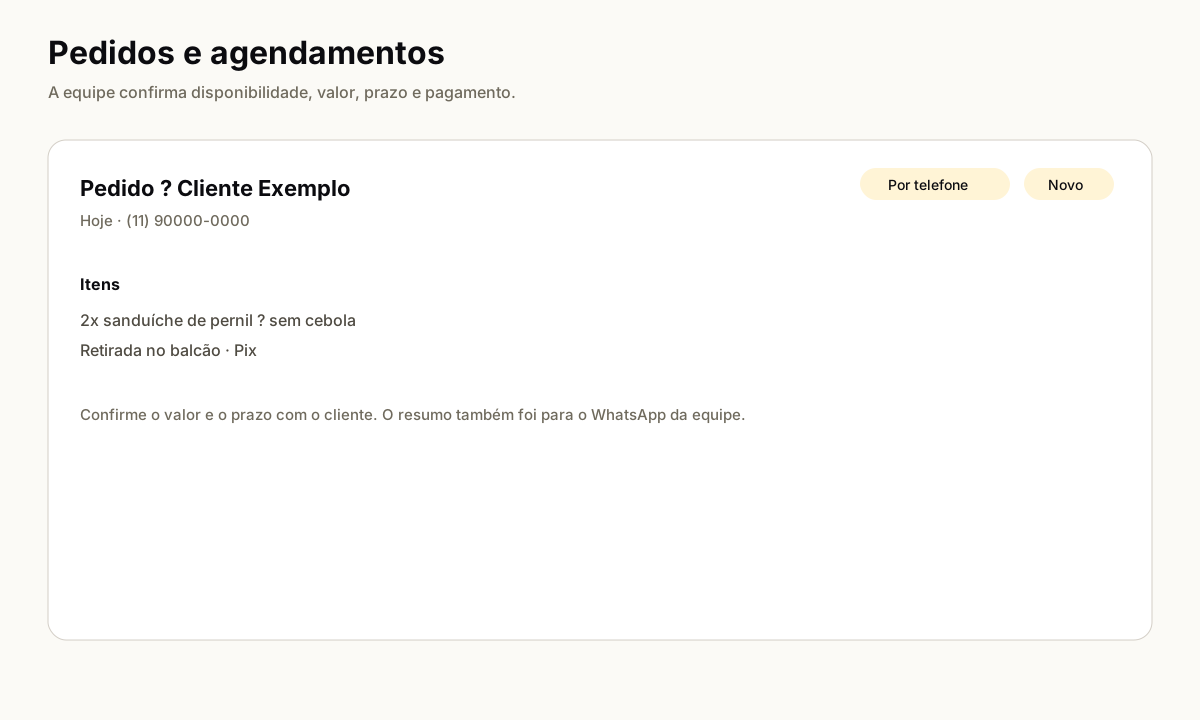
Example: "2 pork sandwiches without onion, pickup at the counter, payment via Pix." The team's message includes the name, the phone number and the WhatsApp link. The customer's message asks them to reply if anything is wrong.
The full path, with the text that the team and the customer receive, is in orders by phone.
The team is the one who gives the time estimate
The AI doesn't make up "ready in 15 minutes". It lets them know that the team confirms the price and time estimate via WhatsApp. The griddle changes from minute to minute, and a guessed time estimate turns into a complaint.
The order stays on the dashboard and on the WhatsApp of whoever is preparing it. If the customer calls again, the snack bar staff already have the order in hand and reply with the real time. If you want the AI to also give time estimates, that goes into the text you teach it, with the house rule, not with a number invented on the spot.
Table reservation is another mode
The same system books a time when the job is scheduling, not an order. A pizzeria that reserves tables or a kitchen that takes orders for parties uses scheduling by phone: the AI checks the available times and books.
Each number has a mode. The delivery number takes orders. The reservation number books times. Both can exist in the same account.
Those who prefer to write
Some customers don't call, they send a message. The menu bot and the WhatsApp agent take the order by text. Confirmation follows the same idea: the person confirms, the team receives the summary and gives the price and time estimate. Phone and WhatsApp land at the same counter.
What to have ready before turning on the number
- The menu in text, with what's available and what isn't.
- The griddle's WhatsApp, the team's, not each person's personal one.
- The sentence stating that price and time estimate are confirmed by the team.
- The hours when the AI answers and what it says when the store is closed.
The number costs R$ 399 per month, already including the number and 500 minutes. Other industries, on the same system, are in virtual attendant by segment.